CAREERS |
WE’RE HIRING A LEAD AUTOMOTIVE TECHNICIAN. INTERESTED?
CAREERS |
WE’RE HIRING A LEAD AUTOMOTIVE TECHNICIAN. INTERESTED?
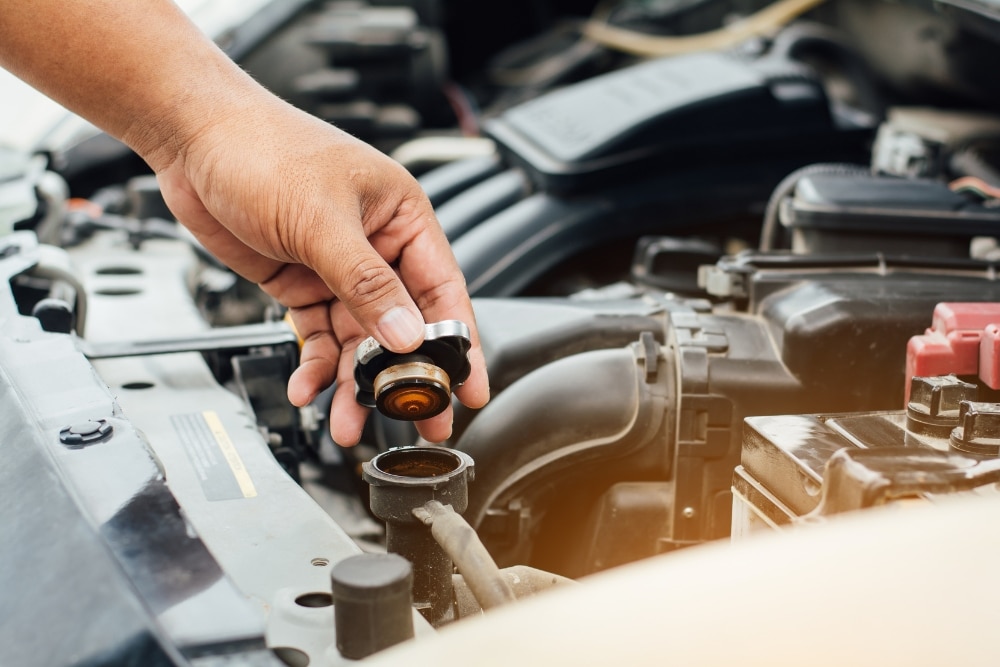
Your engine’s cooling system works hard every time you drive, but how often do you think about the coolant flowing through it? If you’re like most drivers in Hendersonville, it’s probably not at the top of your maintenance list. At Kanuga Tire & Auto, we see the consequences of neglected coolant systems every week: corroded radiators, overheating engines, and expensive repairs that could have been prevented with a simple coolant flush.
Understanding when and why to service your coolant system can save you from major engine damage and keep your family fleet running reliably.
Most people assume coolant just prevents overheating in summer. That’s only part of the story. Your coolant is actually a multi-tasking protector working around the clock:
When any of these protective functions fail due to old or contaminated coolant, your engine becomes vulnerable to serious damage.
Here’s what most shops won’t tell you: coolant doesn’t last forever. Over time, the additives that make it work break down, and the fluid becomes acidic. That acidic coolant then starts eating away at the very components it’s supposed to protect.
When these components degrade, your cooling system becomes a hostile environment for the very parts keeping your vehicle running.
Today’s vehicles face a unique problem: the mix of plastic and metal components. Manufacturers use plastic radiator tanks, thermostat housings, and coolant reservoirs to cut weight and cost. These plastic parts are particularly susceptible to degradation from contaminated coolant.
Modern engines also run hotter and work harder than their predecessors. Higher compression ratios, turbochargers, and tighter emissions controls mean your engine operates at extreme temperatures.
What starts as slightly degraded coolant can lead to complete system failure within months.
Many Hendersonville drivers think cooling system problems only happen in summer. Winter puts unique stress on these components. Cold temperatures cause fluids to contract, putting pressure on hoses and connections. If your coolant has lost its freeze protection, it can turn to slush or ice inside your engine, potentially cracking your engine block.
Your vehicle usually gives you clues before a complete failure:
Don’t ignore these warnings. What seems minor can escalate quickly.
Not sure if your coolant is still doing its job? Here’s a quick comparison:
| Good Coolant | Bad Coolant |
|---|---|
| Appearance: Bright, translucent color (green, orange, pink, or yellow) | Appearance: Rusty brown, murky, milky, or has floating debris |
| Smell: Faint sweet odor only when cap is removed | Smell: Strong sweet smell inside cabin or around engine |
| Texture: Smooth, consistent liquid | Texture: Thick, sludgy, or oily film on surface |
| Level: Stays between "MIN" and "MAX" lines | Level: Constantly drops or disappears |
| Temperature: Engine reaches normal temp quickly, stays stable | Temperature: Gauge fluctuates or runs hotter than normal |
| Protection: Freeze protection to -35°F, boiling point above 220°F | Protection: Lost effectiveness, minimal temperature protection |
If you notice any characteristics in the “Bad Coolant” column, it’s time to schedule a coolant flush. Our ASE-certified technicians at Kanuga Tire & Auto can test your coolant’s pH level and protection capacity during your visit at no extra charge.
Not all coolant services are created equal. At Kanuga Tire & Auto, we understand you’re busy, but we won’t cut corners on quality.
You’ll receive our complimentary comprehensive digital vehicle health report with photos showing exactly what we found.
A coolant flush is one of the most affordable preventive services you can invest in, but the consequences of skipping it can be severe. When coolant maintenance is neglected, you’re not just risking inconvenience; you’re potentially facing major repairs that could have been prevented:
Every one of these repairs can be caused or accelerated by neglected coolant. The peace of mind that comes from staying on top of this simple maintenance service far outweighs the risk of unexpected breakdowns and major component failures. Your vehicle’s cooling system works hard to protect your engine. Giving it the attention it needs now prevents problems that could leave you stranded later.
We started this shop because we believe in treating customers right and providing honest, transparent service. When you bring your vehicle to us at 432 Kanuga Road, Hendersonville, NC 28739, you’re working with a team that genuinely cares about your family’s safety.
We offer financing through Synchrony and accept text-to-pay for your convenience. Our ASE-certified technicians can check your coolant’s pH level during routine visits at no extra charge.
Schedule your coolant system inspection today at (828) 697-2860 for peace of mind.
Most manufacturers recommend coolant flushes every 30,000 to 50,000 miles. Schedule service if:
Whether you drive a Ford, Chrysler, Toyota, Honda, Hyundai, or Kia, we’ll use the correct coolant specification for your vehicle.
If you never flush your coolant, the protective additives break down and the fluid becomes acidic, causing internal corrosion in your radiator, water pump, heater core, and engine block. This corrosion leads to leaks, overheating, and potentially catastrophic engine damage that costs thousands of dollars to repair.
A clogged coolant system typically shows symptoms like engine overheating, poor heater performance, visible rust or debris in the coolant reservoir, or temperature gauge fluctuations. You may also notice slow warm-up times or the heater blowing cold air even after the engine reaches operating temperature.
Your car can overheat even with sufficient coolant due to a failing water pump, stuck thermostat, clogged radiator, leaking head gasket, malfunctioning cooling fans, or air pockets in the system. A comprehensive cooling system inspection can identify the exact cause and prevent further damage.
A professional coolant flush typically takes between one to two hours, depending on your vehicle’s make and model and the condition of your cooling system. This includes a thorough inspection, pressure testing, draining old coolant, flushing the system, refilling with manufacturer-specified coolant, and testing for proper operation.
Your vehicle requires a specific coolant type based on its make, model, and year, which is listed in your owner’s manual. Different formulations exist for different engines, and using the wrong type can cause damage. Our technicians will identify and use the correct manufacturer-specified coolant for your specific vehicle.
Don’t wait until you’re dealing with overheating or engine damage. Visit Kanuga Tire & Auto at 432 Kanuga Road, Hendersonville, NC 28739, or call us at (828) 697-2860 to schedule your coolant system inspection today.
We also serve families in Flat Rock, East Flat Rock, Valley Hill, and Laurel Park. Let us give you the peace of mind that comes from knowing your family fleet is properly maintained.